

Small groups in kindergarten can completely transform how your classroom runs—or completely overwhelm your day if they aren’t set up correctly. Before the school year even begins, one of the most important systems you can plan is your small group instruction. Not the cute bins. Not the color-coded labels. Not the Pinterest-perfect schedule. I’m talking about the structure behind your teaching.
Because here’s the truth: small groups in kindergarten only work when they are flexible, organized, and driven by real student data. Without a clear system, they quickly become the most stressful part of your day instead of the most powerful.
The secret? Effective small groups in kindergarten are built on fluid grouping, intentional planning, and a repeatable instructional routine that you can use every single day. Let’s break it down.
One of the biggest shifts I made in my teaching was this: 👉 Small groups are NOT permanent.
At the beginning of the year, it feels easy to sort students into groups and leave them there. But kindergarten students grow fast. Really fast. A student who is working on letter identification in week one may be ready for beginning sounds in week two. Another student who is reading CVC words may suddenly need support with blending. If your groups don’t change, your instruction stops matching student needs.
That’s why small groups should always be:
✔ Flexible
✔ Data-driven
✔ Skill-based
✔ Constantly evolving
Instead of asking, “Who is in this group?” ask: “What skill does this student need next?”
That one shift changes everything.
Small groups fall apart fast when materials are not ready. You know the moment—students are sitting at the table, you’re flipping through bins, searching for letter tiles, and trying to remember what you planned. We’ve all been there. That’s why organization is EVERYTHING.
One of my favorite Kindergarten Chaos systems? Crate seats.
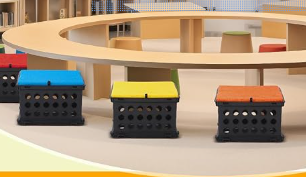
Not only do they give students a place to sit, they also double as built-in storage for small group materials. When students arrive, you’re. No digging. No delays. Just teaching.
Small groups in kindergarten do NOT need to be complicated. In fact, the simpler your structure, the more effective your instruction becomes.
I use the same three-part routine every time:
Start with quick, familiar skills to build confidence and activate prior learning. Keep it fast, consistent, and engaging.
This is your focused, intentional instruction based on student data. This is where differentiation lives.
One group may be learning letter names.
One group may be working on beginning sounds.
One group may be blending CVC words.
Keep instruction:
✔ Explicit
✔ Clear
✔ Short
✔ Focused on ONE skill
Less talking. More teaching.
This is where the learning sticks. Kindergarten students NEED hands-on practice immediately after instruction. When students touch it, build it, and interact with it—they learn it.
Not every group should look the same. And honestly… they shouldn’t. One group may still be learning letter identification. Another may be working on letter sounds. Another may be ready for blending and decoding. That’s exactly how small groups should function.
When instruction is matched to student needs, growth becomes natural and consistent.
I always lean into hands-on, low-prep resources that keep little learners engaged while targeting specific skills:
• Alphabet Activities (Alphabet Activities for Kindergarten)
• Alphabet Puzzles
• Sight Word Activities (Must Have Sight Word SOR Strategies Resource for Kindergarten)
• CVC Word Work (CVC Words Made Fun: Simple Ways to Teach and Practice in Kindergarten)
• Decodable Readers and Passages (Truly Decodable Readers In Kindergarten and Decodable Reading Passages For Little Learners)
• Fine Motor Literacy Activities (10 Easy Literacy Center Activities That Actually Work for Pre-K, Kindergarten, and 1st Grade)
• Math Tool Kit
• Jenga Tumbling Towers
These make it easy to differentiate without reinventing the wheel every day.
The secret to effective small groups isn’t more planning. It’s better systems.
When you:
✔ Let data drive instruction
✔ Keep groups flexible and fluid
✔ Stay organized with ready-to-go materials
✔ Use a simple review–skill–practice structure
…your small groups become one of the most powerful parts of your kindergarten classroom. And instead of feeling overwhelmed, you feel prepared, confident, and ready for those tiny learners walking through your door.