
April and May are wonderful months for exploring All About Flowers for Little Learners. During these months, I incorporate flowers into a variety of academic activities, enriching the learning experience for my kindergarteners. Flowers are fascinating and offer a sensory experience that many students may not encounter in their everyday environment, making their inclusion in the curriculum both enjoyable and educational.

There are countless creative and engaging ways to integrate flowers into our kindergarten activities. Here is a detailed compilation of my favorite ways to bring flowers into our learning adventures.
We read books and stories that feature flowers, exploring themes of growth, seasons, and nature. This not only enhances literacy skills but also deepens little learners’ appreciation for the natural world. (Plants in the Classroom)
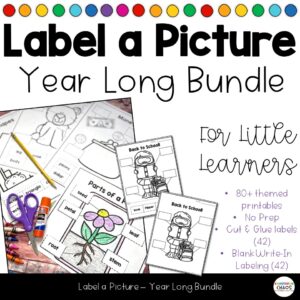
Engaging in meaningful, hands-on activities to enhance literacy skills, such as labeling, makes this bundle ideal for the Flower topic.
Flowers can be a great tool for teaching math concepts. We can count petals, measure stem lengths, and even create patterns using different types and colors of flowers. These activities make abstract math concepts more concrete and relatable for little learners. Ordering Numbers Year Long Bundle includes flowers for practicing number skills.

Flowers inspire a variety of art projects. Your kinders can paint pictures of flowers, create flower collages using different materials, and even try their hand at pressing flowers to preserve their beauty. These activities encourage creativity and help students express themselves artistically.
We can engage students’ senses by smelling different flowers, feeling their textures, and even tasting edible flowers. This multisensory approach enhances their understanding and appreciation of the natural world.
If possible, we can have our little learners engage in small gardening projects, such as planting seeds or taking care of class plants. This hands-on experience teaches responsibility and patience, as students observe the growth process over time.
We can begin by examining different parts of a flower, such as the petals, stems, and leaves. Use magnifying glasses to take a closer look and discuss the functions of each part. This hands-on exploration helps little learners understand plant biology in a tangible way.
Both of the following bundles include flowers for fun and engaging academic skill practice.


Incorporating flowers into your curriculum not only aligns with kindergarten standards but also ignites curiosity and wonder in little learners. These activities foster a love for nature and provide meaningful, memorable educational experiences. For more activities and ideas see –Flower Activities For Little Learners.