

The first week back after winter break can feel a little (okay… a lot) chaotic. Your little learners have had weeks of late bedtimes, holiday excitement, and completely different routines. But the good news? January is the perfect time to reset, refresh, and rebuild classroom systems that support calm, independent learning.
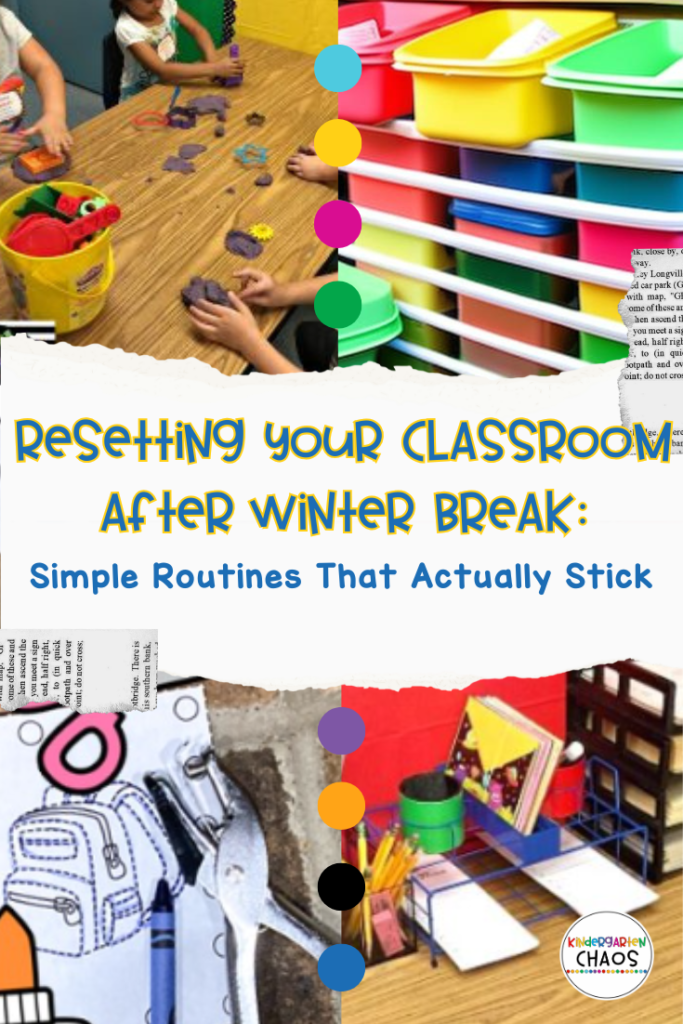
Whether you’re teaching Pre-K, Kindergarten, 1st Grade, or homeschooling, these simple routine resets will help your classroom run smoother—and keep your students engaged all winter long.
Mornings set the tone for the entire day. Instead of jumping into academics right away, give your little learners a predictable, easy-to-follow routine:
Hang up backpacks
Turn in folders
Choose a morning tub (Morning Bins In Kindergarten: A Must Have Routine For A Calm Start)
Work quietly until morning meeting
Morning tubs/bins are ideal because they’re hands-on, quiet, and encourage independence. Think:
Fine motor tasks (Fine Motor Skill Activities In Kindergarten)
Counting Activities (Engaging Counting Activities For Kindergartners)
Seasonal winter themes (Winter Art and Learning Activities for Kindergarten)
Alphabet Practice (Alphabet Activities for Kindergarten)
After winter break, it’s essential to reteach center expectations like it’s the first week of school. Keep instructions simple and consistent:
What center work looks like
What center voices sound like
How to clean up
What to do when finished


Click the image above to visit the KC Store, or click here to shop our TPT Store.
Visual reminders work wonders for little learners. Think:
Picture-based direction cards
Simple “First–Then” boards
Center rotation charts
Cleanup checklists
Reintroducing visuals supports independence, especially in January when students need gentle reminders.
Visual cues help little learners transition, stay focused, and move through tasks with less teacher prompting. Try adding:
Picture schedule cards


Click the image above to visit the KC Store, or click here to shop our TPT Store.
Behavior expectations posters
Line-up visuals
Table routines
Quiet signs
These supports reduce interruptions and help even your most energetic learners return smoothly to structure after the holidays.
January is the month to ditch “What do I do now?” questions.
Offer quiet choices students can use anytime they finish early.
Fine motor mats (Playdough Mats Mega Bundle)
Task boxes
Quiet choices keep little learners engaged—and you get to pull small groups without constant interruptions.
Winter break gives you a natural reset point to reassess: (Assessments In Kindergarten)
Reading levels
Math skills
Letter identification
Fine motor development
Attention span and stamina
January is the perfect time to update your small-group plans: (Small Group Teacher Kit and Student Tool Kit BUNDLE)
Combine students with similar needs
Introduce new hands-on materials
Add quick review warm-ups
Reinforce foundational skills (letter sounds, number sense, handwriting)
Your students are ready for structure.
You’re ready for calm.
And routines are the bridge that gets you there.
Refreshing your January routines helps:
Reduce behavior issues
Increase independence
Build confidence
Strengthen foundational skills
Make centers and small groups run smoother
Create predictable, stress-free days for you and your little learners
A mid-year reset doesn’t have to be overwhelming. By focusing on simple, visual, predictable routines, you’ll create a classroom environment where your little learners thrive—academically and emotionally.
January is your chance to reboot, refresh, and make the second half of the year your best yet!