
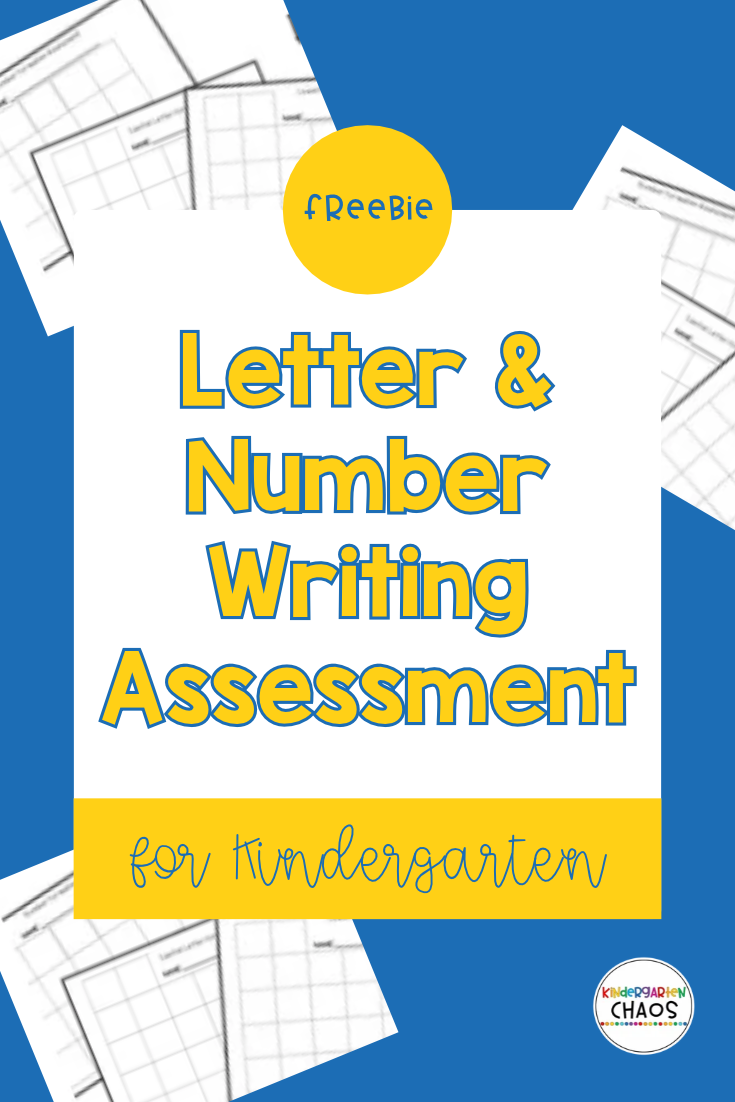
We know that assessment drives instruction, so it is always a good idea to complete initial assessments with beginning students, even when they cannot yet complete the task independently. These early assessments provide valuable information about what your little learners know, what they can do, and where they need additional support. Today, I am sharing a **FREEBIE** Letters and Numbers Writing Assessment that is perfect for preschool, Pre-K, and kindergarten classrooms!
I loved having a baseline at the beginning of the school year. It gaves me something to refer back to as students grow and develop throughout the year. It also provided documentation that can be shared with students, parents, and administrators to show progress and areas of need.
When students first enter the classroom, they come with a wide range of abilities and experiences. Some students may already recognize and write their letters and numbers, while others may still be learning how to hold a pencil or make intentional marks on paper.
And that is perfectly okay!
The purpose of an initial assessment is not expection students to know everything. Instead, it is to find out where they are starting.
A beginning-of-year writing assessment can help you identify:
Most importantly, these assessments give you a starting point. You can use the information to plan whole-group instruction, small groups, interventions, and individual learning opportunities.
Give your students this alphabet letter writing assessment within the first two weeks of school. Administer it whole-group because it will allow you to get a quick look at where your little learners are academically.
Each student receives a printable assessment. Give verbal directions, asking your students to write their names and put their finger in the first box.
From there, call out the number or uppercase/lowercase letter and direct your students to try their best.
Some students will be able to write the letters and numbers, while others may simply scribble, make an attempt, or leave the box blank.
And that is perfectly fine!
Remember, this is an initial assessment. We are looking for a baseline, not perfection. Even when your students cannot complete the task, their attempts provide useful information about their current abilities.
Print the uppercase and lowercase letter assessment pages and copy them front to back. Administer uppercase letters on one day and lowercase letters the following day. This is especially helpful with beginning students because they may not have the stamina to complete both assessments in one sitting.
You can also administer the number formation assessment separately, depending on your classroom schedule and student needs.
Keep it simple, provide clear directions, and encourage your students to do their best!
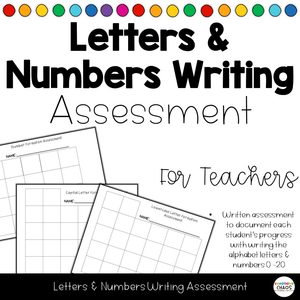
This **FREEBIE** assessment includes:
The printable format makes it easy to administer, collect, and save student work for future comparison.
I recommend keeping these initial assessments in each student’s assessment folder or portfolio. You can revisit the same skills later in the school year to see how much progress your little learners have made.
Once you have completed your initial assessments, take some time to look at the results.
Which students are already forming letters and numbers independently? Who needs additional practice? Are there common areas where several students are struggling?
This information can help you make instructional decisions and determine which skills need to be addressed during whole-group lessons, centers, and small-group instruction.
You can also repeat the assessments later in the year to document growth. It is always exciting to look back at those first few weeks of school and see just how far your little learners have come!
Download your copy, print the pages, and get a snapshot of where your little learners are starting.
Remember, we aren’t looking for perfection. We are looking for information that helps us make the best instructional decisions for our students.

Because assessment drives instruction, and knowing where your students begin helps you determine where to go next!
Happy Teaching, Teacher Friend!