
Welcome back to Day 23 of my 31 Days of Kindergarten series.
If there’s one thing I wish more people understood about kindergarten writing, it’s this: Writing doesn’t start with sentences. It starts with lines, curves, shapes, and control. That’s exactly why directed drawing for kindergarten has become one of the most powerful parts of the literacy block.
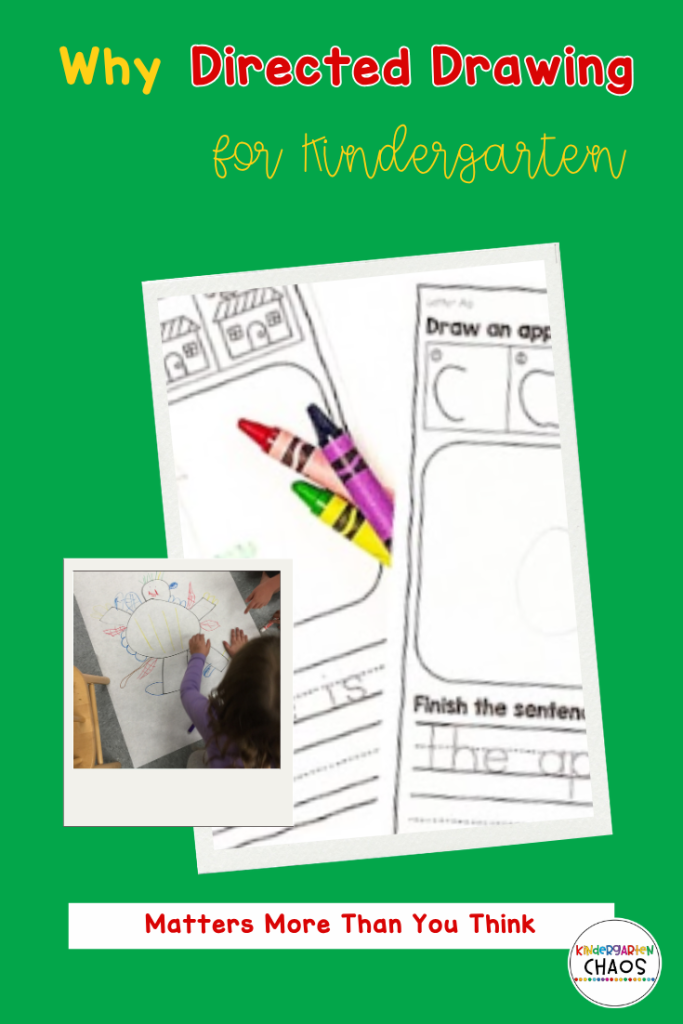
At first glance, it looks like “just drawing.” But in reality, students are building the exact foundational skills they need to become confident writers. And they don’t even realize it. That’s the magic.
When people think about writing, they often jump straight to sentences, spelling, and sight words. But kindergarten writing is so much more developmental than that.
Before a child can write a sentence, they have to be able to:
Directed drawing naturally builds ALL of these skills in a meaningful, engaging way. Instead of worksheets, little learners are drawing something fun and purposeful. But underneath that fun… real writing skills are developing.
Every letter in the alphabet is made from simple strokes.
When students participate in directed drawing, they are repeatedly practicing these exact movements. They’re not just “drawing a penguin” or “making a snowman.” They are training their hands to control the same strokes they will later use for writing letters. This is why I always say: Drawing is handwriting in disguise. “Teaching Pencil Grip To Little Learners“
Kindergarten writing is physically demanding. Many students struggle not because they don’t know what to write… but because their hands aren’t ready yet.
Directed drawing helps strengthen:
And the best part? Little learners stay engaged because it feels like art—not work. That alone increases participation and confidence instantly. “Tips For Pencil Grip Intervention in Kindergarten“
One of the biggest struggles in kindergarten is the blank page. When little learners see an empty paper, many immediately say: “I don’t know what to write.” But after a directed drawing lesson? That problem disappears. Now they have something in front of them. A character. An animal. A scene they created themselves. Instead of guessing what to write, they already have a story idea. That alone removes so much writing anxiety.
One of my favorite routines is turning every directed drawing into writing. It looks like this in the kindergarten classroom:
Step 1: Draw together
Model each step and your students follow along.
Step 2: Add details and color
Students make their picture their own.
Step 3: Label the picture
Stretch words and listen for sounds.


Step 4: Write one sentence
Students describe their drawing.
Over time, that one sentence naturally grows into two, three, and even more. This progression builds independence without overwhelming beginning writers.
As we draw, we talk. A lot.
We use words like:
Little learners hear academic language in a natural way while they create. Later, when it’s time to write, those words are already familiar. That makes writing smoother and more confident.
If you’re using directed drawing in your classroom, these Kindergarten Chaos resources pair perfectly:
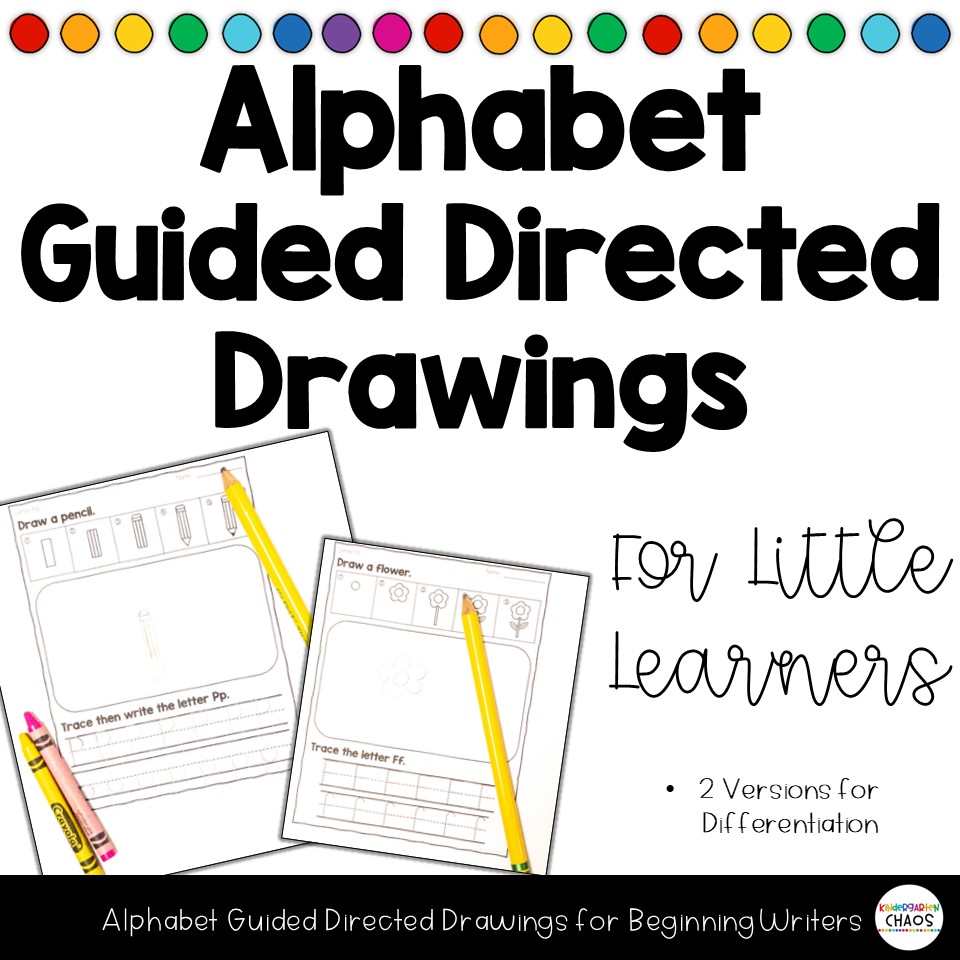


These resources keep your writing center consistent while giving little learners fresh, engaging themes all year long.
Directed drawing in kindergarten is much more than an art activity. It’s one of the easiest ways to build the skills children need before they begin writing. Every drawing strengthens fine motor skills, improves pencil control, teaches little learners how lines and curves work together, builds vocabulary, and gives students confidence. When a child proudly says, “I made this!” they’re learning that they can create something all by themselves. That confidence carries over into writing. Every writer starts somewhere. Sometimes it starts with a sentence. Sometimes it starts with a picture. And sometimes it starts with one little circle that gives a child the confidence to keep going. That’s the magic of kindergarten.