
Looking for a FREE kindergarten math activity that is easy to prep, hands-on, and actually gives your little learners meaningful practice? These Counting Jars Activity are one of my favorite simple math activities for practicing counting, number recognition, one-to-one correspondence, and writing numerals.
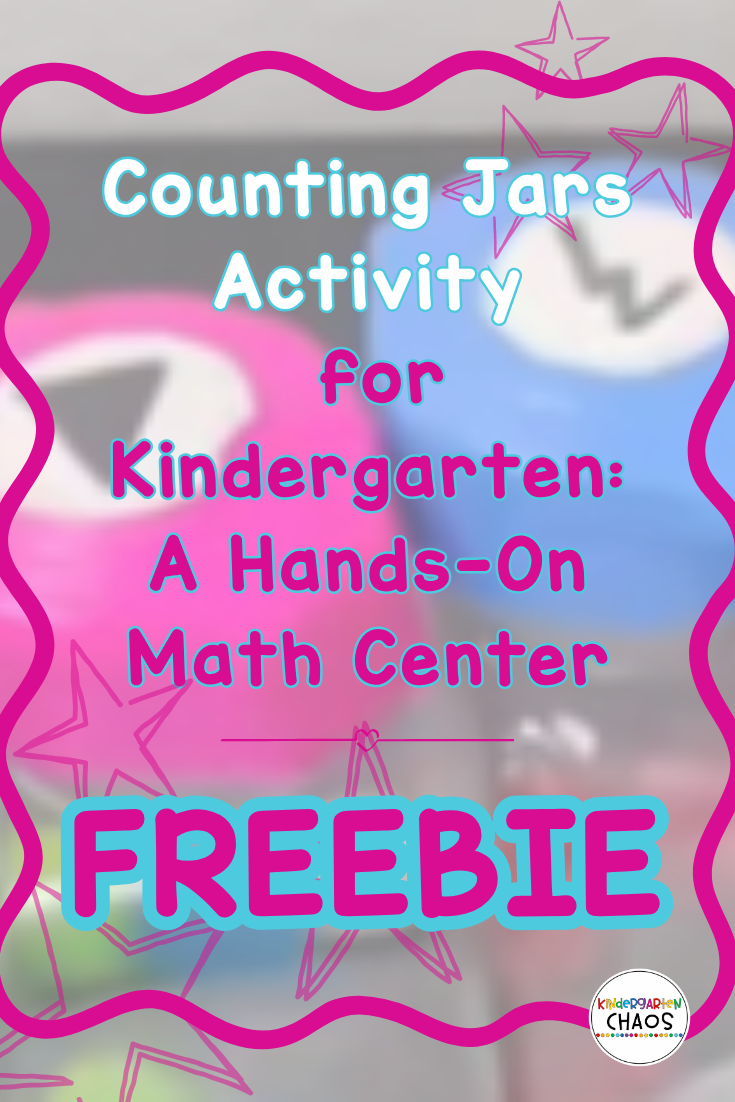
And the best part? You can make this kindergarten math center with things you probably already have in your classroom!
I created these Counting Jars because I wanted an activity that my little learners could use independently or with a partner while I worked with a small group. They are simple enough for kindergarten students to understand, but they can also be easily differentiated as your students’ math skills grow.
Plus, I’m giving you the Counting Jars recording sheets FREE! 🎉
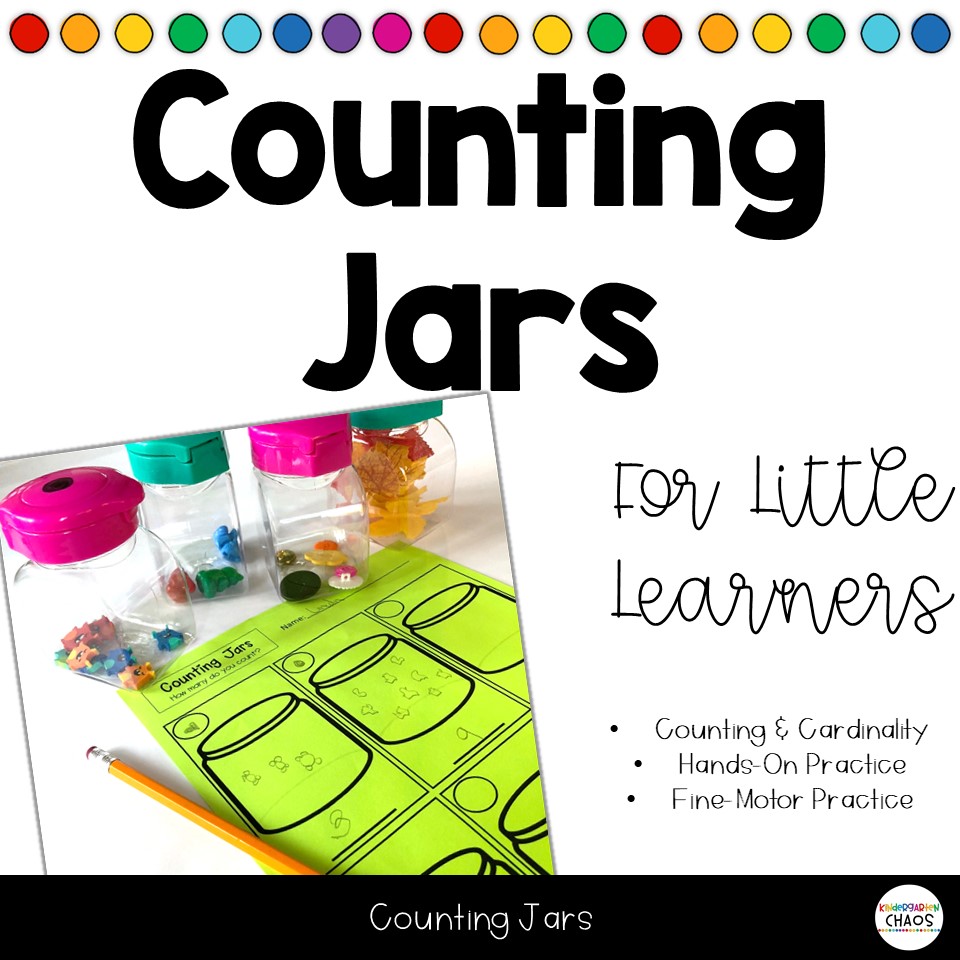
Kindergarten students need lots of opportunities to touch, move, count, see, and talk about numbers. Worksheets have their place, but little learners benefit from hands-on experiences that connect numbers to actual quantities. Counting Jars do exactly that.
Students aren’t just looking at a number and writing it down. They are actually:
And because you can change what goes inside the jars, you can use this activity again and again throughout the school year.
Counting Jars are exactly what they sound like! You prepare several small containers and place a different number of manipulatives inside each one. Each jar gets its own letter, shape, or picture label so students can identify the jar without confusing the label with the number of objects inside.
I actually recommend not using numbers as the jar labels. Why? If you label a jar “5,” a beginning mathematician may think the 5 tells them how many objects are inside. Using a letter, shape, or simple sticker instead keeps the focus on actually counting the objects. Students choose a jar, count the objects inside, record the jar label, draw the quantity, and write the corresponding numeral on their recording sheet.
That’s a LOT of meaningful math practice from one very simple activity!
You don’t need fancy materials to make this kindergarten math center.
For the jars, you can use small plastic containers, cups, bags, or whatever you already have available. I found my at the Dollar Tree many years ago.
For the manipulatives, try:
This is also an easy activity to change with the seasons. Use apples in the fall, pumpkins for October and November, hearts in February, bugs in the spring, or anything that fits the theme you are teaching.
Start with 6 jars for the basic recording sheet. Label each jar with a different letter, shape, or sticker.
For example:
A — 4 objects
B — 7 objects
C — 2 objects
D — 9 objects
E — 5 objects
F — 8 objects
You can choose the numbers based on what your students are currently working on. For students who are just beginning to count, you might use quantities from 1–5. Once students are ready, increase the quantities to 1–10. For students who need a challenge, you can use larger quantities and move toward 1–20. That’s what makes this such a useful differentiated kindergarten math activity.
There are SO many ways to use these.
Set the jars at a math center with the FREE recording sheets. Students work through the jars one at a time, counting and recording their findings. This is a great option when you need a purposeful independent activity while you’re working with a small group.
Counting Jars are also perfect for your math bins. If you are setting up math tubs for your classroom, put a few jars and recording sheets into a tub. Students can practice counting and number recognition independently or with a partner.
If you want more ideas for setting up purposeful math tubs, check out my post Secret to Successful Math Tubs in Kindergarten and Math Bins for Little Learners.
Have a student finish their assigned work early? Instead of giving them another worksheet, send them to the Counting Jars center! They can choose a jar, count the objects, and complete the recording sheet. It’s purposeful practice without creating more work for you.
Counting Jars don’t have to be independent. Put two students together and have one student choose the jar while the other counts the objects. Then have them switch jobs. You can even encourage students to explain how they know their answer. “How many objects did you count?” “How did you keep track?” “What numeral represents that amount?” These simple conversations help build mathematical language along with counting skills.
You can also bring the jars to your teacher table. This is especially helpful when you have students who need additional practice with counting or connecting quantities to numerals. Because you control the quantities in each jar, you can easily adjust the activity for the students sitting in front of you.
One of my favorite things about this activity is how easy it is to differentiate.
Use quantities from 1–5. Have students count each object while touching or moving it. You can also count together before asking students to record the answer independently.
Use quantities from 1–10 and have students independently count, draw, and write the numeral.
Increase the quantities to 1–20. You can also ask students to compare two jars. Which jar has more? Which has fewer? How many more? How many would you need to make 10? Now your simple counting activity becomes a beginning number sense and addition activity!
Once your little learners understand how the activity works, you can introduce the addition recording sheet included with the freebie. Instead of recording one jar at a time, students can work with multiple jars and combine quantities. This gives you an easy way to move from:
counting → number recognition → writing numerals → comparing quantities → beginning addition
without completely changing the activity. That is exactly the kind of purposeful, hands-on practice I love for little learners.
If your students need additional practice with counting, number recognition, and number sense, Kindergarten Chaos has lots of hands-on math activities you can add to your classroom routines.
The Count & Match Number Sense 1–30 Monthly Bundle gives you year-round themed counting practice for your math centers, morning tubs, independent practice, partner work, and small groups. Students practice matching quantities to numerals while working with fun monthly themes. There are also options for differentiation and addition practice.


If you love FREE kindergarten math activities, don’t miss my 180 Days of School Ten Frames FREEBIE!
Ten frames give little learners a visual way to practice counting, number recognition, quantities, subitizing, and number sense throughout the school year.
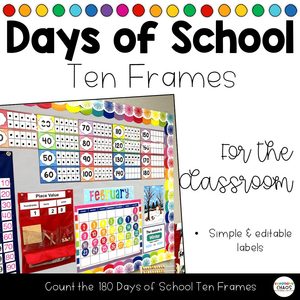

If you’re looking for even more ideas for keeping your little learners engaged in purposeful math practice, Math Bins for Little Learners post includes ideas for manipulatives, counting activities, number recognition, sorting, ten frames, dice games, and more.
The best kindergarten math activities don’t always require a lot of prep or expensive materials. Sometimes the simplest activities are the ones your little learners will use again and again. Counting Jars are a great example.
With a few containers, some small manipulatives, and a pencil, you can create a hands-on kindergarten math center that giveskindergarteners meaningful practice with counting, quantities, number recognition, one-to-one correspondence, and writing numerals.
And because you can change the objects, quantities, and level of difficulty, you can use this activity throughout the school year.
Ready to try it?
Don’t forget to sign up for the Teachers Lounge to receive weekly newsletters packed with FREEBIES, practical classroom ideas, and fun activities to make teaching your little learners a little easier!

Happy teaching, Teacher Friend! ❤️