
Teaching syllables doesn’t have to mean another worksheet or complicated phonics lesson! For little learners, syllables are much easier to understand when they can hear them, say them, move to them, and play with them. Think of a syllable as a beat in a word. Once children learn to listen for those beats, they can begin breaking words apart and developing the phonological awareness skills they need for reading.
The best part? You can practice syllables almost anywhere—during morning meeting, transitions, literacy centers, storytime, or even while waiting in line!
Here are 8 fun and easy ways to practice syllables with kindergarteners.
When teaching syllables, start with words your students already know. Tell your students: “A syllable is a beat we hear in a word!” Then say a word and have students listen for the beats.
Don’t worry about using complicated terminology at first. Your goal is simply to get those little ears listening!
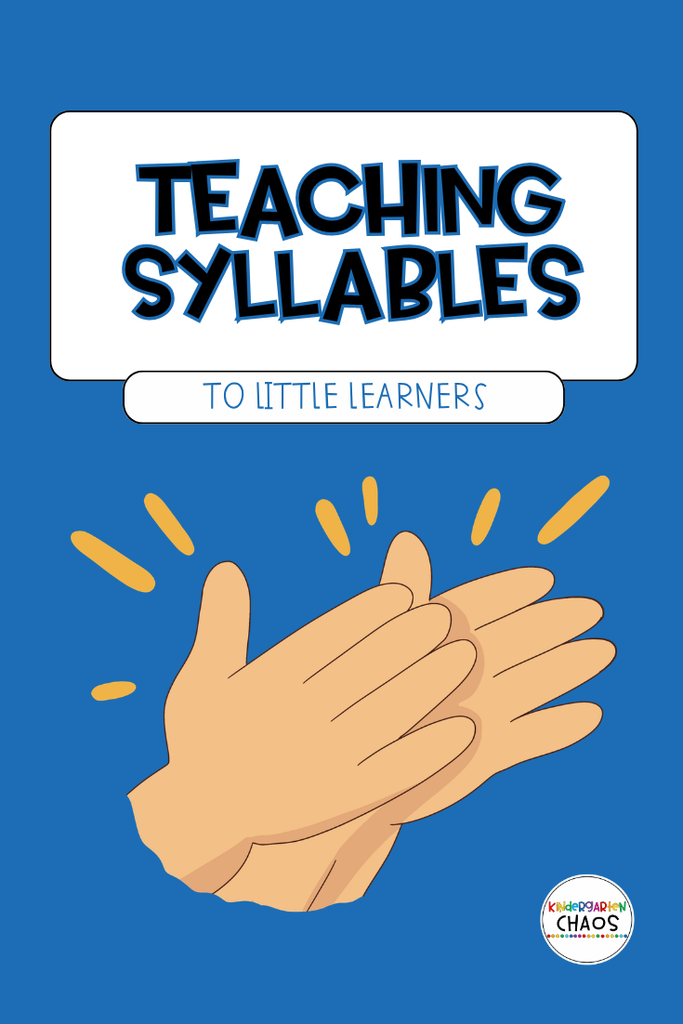
Clapping is one of my favorite ways to introduce syllables because every child can participate. Say a word slowly and have students clap once for each syllable.
Try:
cat 👏
rabbit 👏👏
elephant 👏👏👏
caterpillar 👏👏👏👏
Once students understand the idea, let them take turns choosing words for the class to clap. You can even use tambourines, rhythm sticks, clappers, puppets, toy grabbers or other classroom instruments to make the activity even more engaging.
Sometimes changing the movement is all it takes to keep kindergarteners interested!
Instead of clapping, try:
Say “dinosaur” and have students stomp three times: di – no – saur! 👣👣👣 Movement gives children another way to experience the sounds in words.
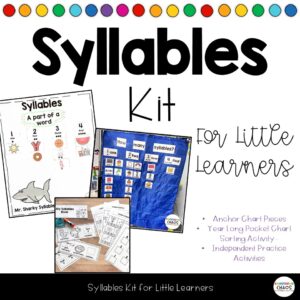
Pictures are especially helpful for little learners because they don’t have to worry about reading the word yet. Show students a picture and say its name together. Then have them determine how many syllables they hear.
Create sorting groups for: 1 Syllable | 2 Syllables | 3 Syllables | 4 Syllables
Try words such as:
Have students place each picture into the correct syllable group. This makes a great literacy center or small-group activity!


Kindergarteners LOVE music, so why not use it to practice phonological awareness?
Sing a simple chant while tapping the syllables:
“Ba-na-na!” 👏👏👏
“El-e-phant!” 👏👏👏
“But-ter-fly!” 👏👏👏
You can also practice syllables while singing familiar nursery rhymes or songs. The rhythm helps children naturally tune in to the individual parts of spoken words.
Want to add a little creativity? Make a syllable caterpillar! Each section of the caterpillar represents one syllable. Give students a word and have them build a caterpillar with the correct number of sections.
For example: butterfly = but – ter – fly That’s 3 syllables, so the caterpillar gets three body sections. 🐛 This is a fun way to combine phonological awareness with a hands-on craft.
Take syllable practice around the classroom! Tell students: “We’re going on a syllable hunt!” Choose classroom objects and have students say the names and count the syllables.
Try:
You can even let students become the teacher and choose an object for everyone else to clap.
Get those wiggles out while practicing phonological awareness! Create a simple hopscotch path with numbers 1–4. Say a word and have students jump the number of spaces that matches the number of syllables.
For example:
cat → jump 1
rabbit → jump 2
banana → jump 3
caterpillar → jump 4
You can take this activity outside for a fun whole-class movement game.
When teaching syllables, remember that kindergarteners don’t need a long, complicated lesson. They need lots of opportunities to hear and play with words. Keep practice short, playful, and repetitive.
Clap it.
Tap it.
Stomp it.
Sort it.
Sing it.
Jump it!
And most importantly, have fun with it!
When children begin hearing the beats in words, they’re developing an important foundation for later reading and word work. Those little moments of listening and playing with language really do add up!